Imagine this: you open a short-video app on your phone, a five-minute drama appears uninvited. A young man leaves the city, returns to his hometown, starts a business among centuries-old lychee trees, overcomes hardship and finds love. The camera lingers on gnarled ancient trunks, sunlit farm paths, and the quiet rhythms of rural life.
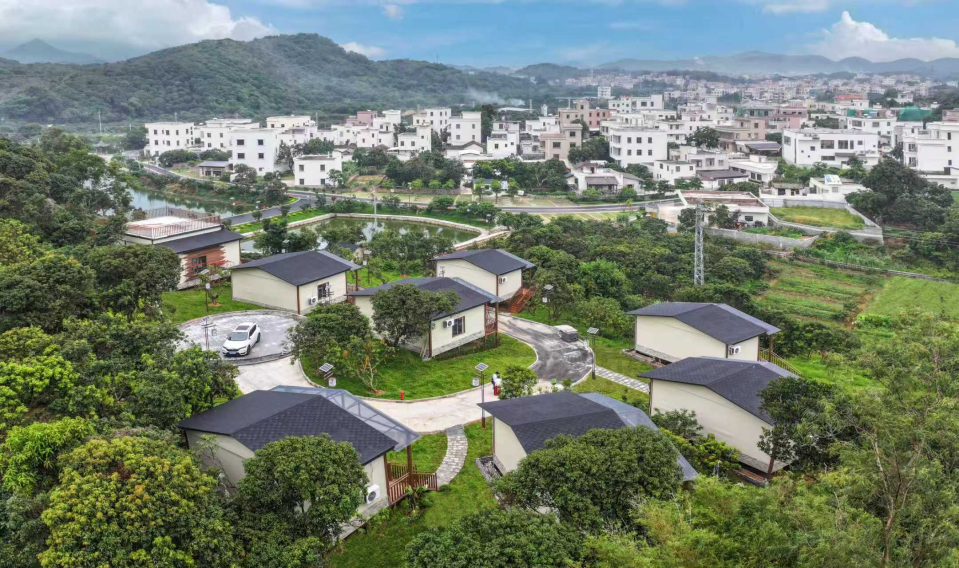
Tandi Village, Maoming, Guangdong Province, China
This story did not come from a major film studio. It was produced in Tandi Village, a small rural community in Maoming, Guangdong Province, China— and yet it has accumulated more than ten million views across Chinese platforms.
Mini Series such as Li Xiang Xin Meng (A New Dream in Lychee Country, Sweetness After Hardship), and Ku Jin Gan Lai Yu Jian Li (The Thousand-Year Lychee Banquet) are part of a growing wave of mini series rooted in China's countryside. In Maoming—long known primarily for agricultural products such as lychees and huajuhong citrus—nearly 200 production teams have moved into villages, orchards and coastal streets, using lightweight filming methods to tell stories of land, entrepreneurship and cultural inheritance.
The impact is tangible. Formerly quiet villages have become social-media destinations. Local residents report annual income increases of nearly 10,000 yuan. Rural spaces once associated with depopulation are now animated by cameras, actors and online audiences.

Mini Series Li Xiang Xin Meng (A New Dream in Lychee Country, Sweetness After Hardship)
For international readers, this raises a series of questions. Why has a local Chinese rural story attracted such mass attention? How has a village with few conventional media resources become a high-output "hit factory"? And is the "rural China + mini series" model a sustainable innovation—or a short-lived experiment built on traffic and novelty?
The Formula for Success: How Villages Became Content Powerhouses
The rise of Maoming's rural mini series is not accidental. It is the result of an alignment between local resources, government facilitation and market incentives. Together, these forces have transformed rural areas from passive backdrops into active production hubs.
1. Rural "Endowments": Landscapes That Write Their Own Scripts
Maoming's villages possess a form of cultural capital that is difficult to replicate. Gaozhou, known as "China's Lychee Capital," is home to vast groves of ancient lychee trees, winding mountain paths and heritage orchards—effectively functioning as ready-made film sets. Productions such as Li Xian Qian Nian Yan (The Thousand-Year Lychee Banquet) are shot entirely on location, integrating landscapes directly into narrative rather than using them as decorative scenery.
Elsewhere, the Danjia settlements along the South China Sea offer contrasting visual textures: red-brick streets suitable for contemporary romance, ornate arcades for period dramas, and sweeping coastal views ideal for suspense or family sagas.
These locations are increasingly embedded within a broader service ecosystem. Marriage-registration sites, themed guesthouses and photography bases now allow a single shoot to expand into a chain of services—from filming to weddings to tourism—turning scenery into infrastructure.
Beyond landscapes, local industries and customs provide narrative raw material. Lychee cultivation, traditional processing techniques, shoemaking, fishing-net weaving, and folk rituals all feed into storylines that feel distinctive without requiring extensive research budgets. The result is content that avoids the homogenization common in urban short-video production.
2. The State as Enabler: Lowering Barriers Without Controlling Content
If rural resources are the soil, policy support has been the fertilizer.
Provincial-level initiatives promoting "media-enabled rural revitalization" created institutional space for experimentation. At the local level, Maoming's approach has been pragmatic rather than prescriptive: dedicated funding for production, designated filming zones, and service platforms offering location coordination, extras, props and logistics.
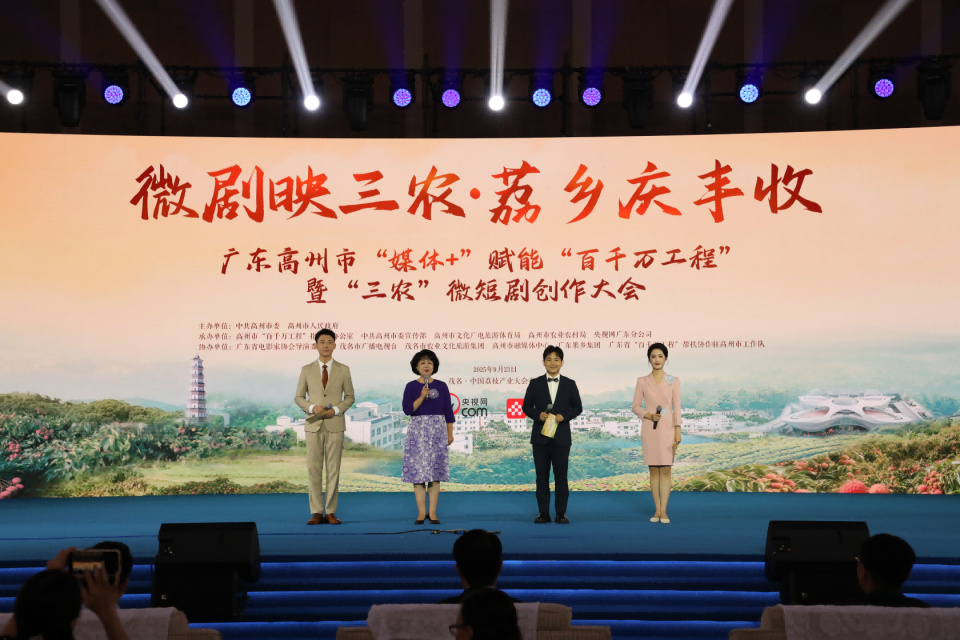
Gaozhou Hosts "Mini Series on Agriculture, Lychee Hometown Celebrates Harvest" Event
For small and mid-sized crews, this removes many of the friction points that typically inflate costs. Villagers, after brief training, often serve as background actors. Over 300 locals have participated across multiple productions. The effect is not only economic but social: residents move from spectators to participants.
The government's role, notably, is not to dictate narratives but to reduce transaction costs, allowing market logic to operate more freely within rural settings.
3. Market Logic: Fast Content, Faster Monetization
Mini series thrive on speed. Production cycles are short, episodes are brief, and distribution is algorithm-driven. A full series can be conceived, filmed and released in under a month.
For investors, Maoming offers a rare combination: low production costs and high thematic value. Rural settings reduce overheads, while stories of entrepreneurship, cultural revival and north-south cultural encounters resonate strongly with domestic audiences seeking authenticity.
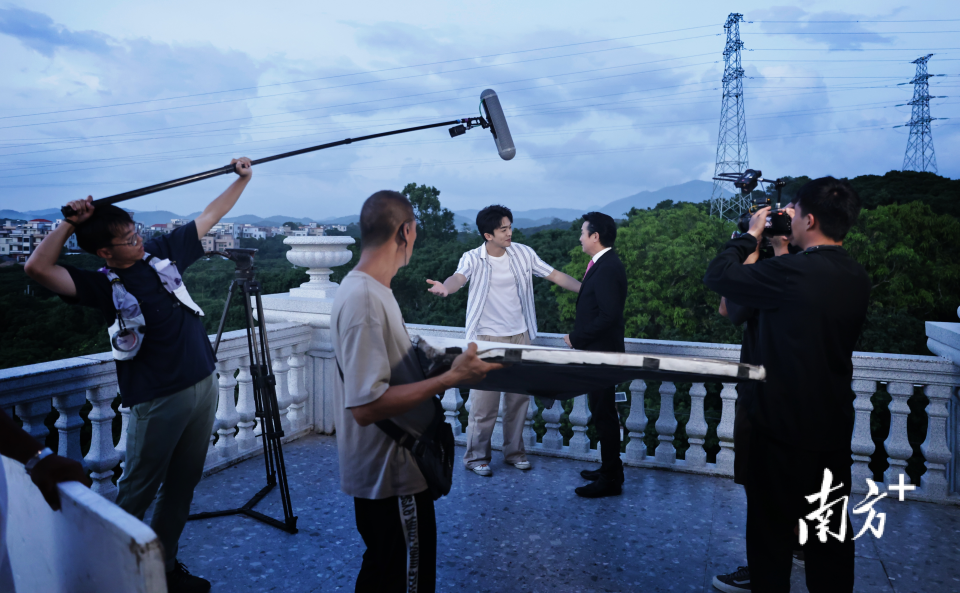
A mini series production crew filming inside a villager's home
Commercial conversion is often built directly into narratives. During lychee season, drama-linked livestreams sold over one million kilograms of fruit, generating revenues exceeding 10 million yuan. Other series boosted sales of local citrus and aquaculture products.
This closed loop "content → attention → consumption" explains why capital continues to flow into what began as a grassroots experiment.
Reflections: Innovation Worth Applauding — Risks That Cannot Be Ignored
Scholars see Maoming's experience as both promising and precarious.
A Cultural Engine for Rural Revitalization
Liu Yiqiang, director of the Institute of Overseas Chinese Governance and Rural Revitalization at Jinan University, describes mini series as a "cultural engine" for rural development. Unlike tourism or e-commerce alone, mini-series give villages narrative presence—not just economic exposure.
Equally important is the shift in agency. Villagers become actors, hosts, operators and entrepreneurs. In Tandi Village, nearly 100 residents now earn income from drama-related work, while household-based businesses have expanded significantly.
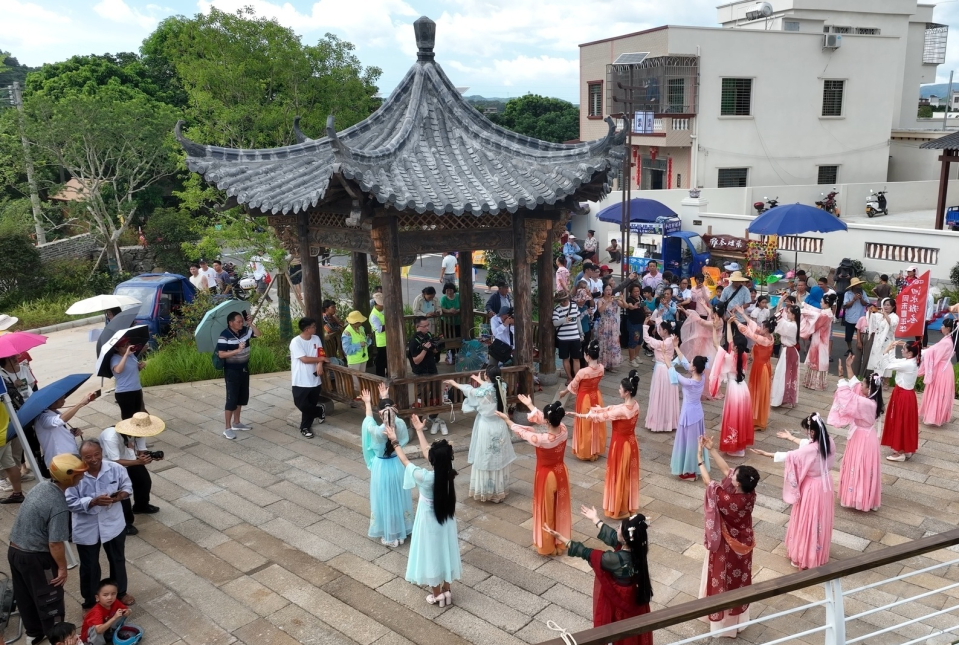
Tandi Village hosts a rural carnival
This form of cultural participation builds confidence as much as income—an outcome often overlooked in economic metrics.
The Structural Risks: Sustainability and Replicability
Yet two challenges loom large.
First, sustainability. Current storylines rely heavily on a limited set of themes: rural entrepreneurship, time travel, romance. Without narrative diversification, audience fatigue is likely. More troubling is the temptation to sacrifice quality for speed, risking vulgarization and reputational damage not only to the industry but to rural communities themselves.
Second, replicability. Other regions may imitate the model by offering similar locations, but Maoming's competitive advantage currently lies more in scenery than in creative capacity. Most writers and directors are still outsiders. Local talent pipelines remain thin.
As Chen Juntong, head of the Guangdong Kapok Rural Innovation Institute, warns: if villages remain mere "scene providers," long-term value will accrue elsewhere.
The distribution of benefits is also uneven. Villagers often receive short-term income, while intellectual property and profits concentrate among production companies.
From Local Stories to Global Screens
For international audiences, the significance of Maoming's rural mini series lies not only in the stories themselves but also in what those stories activate beyond the screen. On global streaming platforms such as Netflix, rural-themed content—Virgin River in the US, Clarkson's Farm in the UK, or Nordic countryside dramas—primarily functions as cultural consumption. These series may boost tourism or brand visibility, but their production remains largely detached from local labor markets and everyday rural economies. Rural space is represented, not reorganized.
Maoming's model operates differently. Here, mini series production has become an entry point into a broader local employment and industry network. Villagers are hired as extras, logistics assistants, set builders, livestream hosts, and short-video operators. Small family businesses—guesthouses, catering services, agricultural cooperatives—are directly integrated into production cycles. Content creation thus becomes a form of flexible, low-threshold employment embedded in rural life rather than an external creative industry temporarily passing through.

Mini Series Li Xian Qian Nian Yan (The Thousand-Year Lychee Banquet)
More importantly, these series function as connectors between cultural visibility and industrial circulation. Agricultural products are not merely symbolic props but commodities embedded within narrative and distribution systems. Lychee farming, citrus processing, and coastal aquaculture are woven into storylines that later extend into livestream sales, tourism routes, and brand-building efforts. In this sense, the mini series acts as a narrative infrastructure linking attention to consumption and employment.
From an international communication perspective, this model challenges conventional assumptions about how cultural products travel. What circulates globally is not only a story, but a development logic: content as a catalyst for localized economic participation. For overseas observers, the key question is not whether these narratives resemble familiar rural dramas, but whether such tightly coupled content–industry ecosystems can be adapted to other regions facing depopulation and employment decline.
Conclusion: An Experiment Still in Motion
Ten million views have placed Maoming's villages in the spotlight. Their success demonstrates that cultural industries are not the monopoly of cities — and that rural areas, when aligned with policy and market forces, can generate narratives that travel far beyond their geographic boundaries.
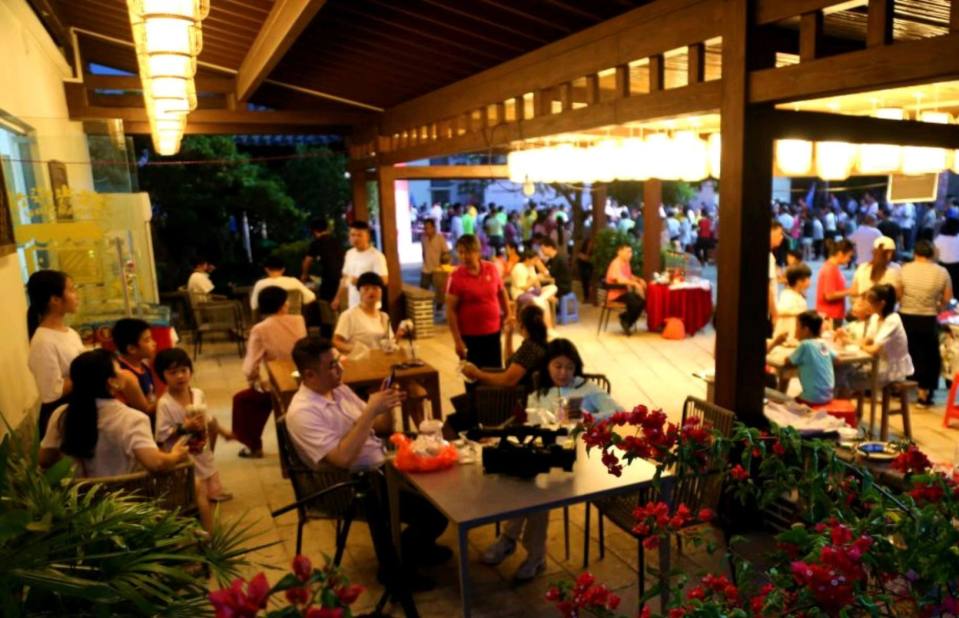
Tandi Village comes alive at night
Yet the true significance of this phenomenon lies not in its numbers, but in its questions. The Maoming model is not a finished blueprint; it is a live experiment in cultural sustainability.
Whether it matures into a lasting ecosystem or fades as another digital trend will depend on its ability to balance traffic and quality, immediacy and endurance, state support and market autonomy.
For rural China—and for other regions seeking cultural-led development—the outcome will matter far beyond the lychee groves where the story began. For this model to resonate internationally, Maoming's rural mini series are not simply cultural texts, but experimental interfaces between media, labor, and place. Their international relevance lies in their attempt to rewire how storytelling, employment, and local industry intersect under platform-driven economies.


